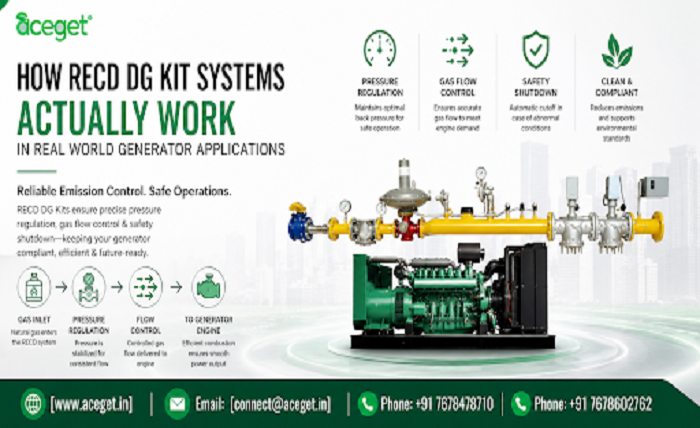
Most businesses using diesel generators are familiar with the need for cleaner and more efficient operations, but fewer understand what actually happens inside a Retrofit Emission Control Device (RECD) when a generator is running. The concept often sounds technical, but the working principle is straightforward once broken down into practical steps.
As industries across India continue upgrading their Diesel Generator Kit infrastructure, understanding how an RECD DG kit functions helps organizations make better decisions about installation, maintenance, and long-term usage. Aceget Private Limited has been at the forefront of deploying these systems, ensuring that businesses not only comply with environmental expectations but also improve overall generator performance.
This article explains how RECD technology works in real-world DG Kit applications, what happens inside the system during operation, and how it integrates with modern diesel generators.
Why Diesel Generators Need Emission Control in the First Place
A diesel generator works by burning fuel in an internal combustion engine. While this process is highly efficient for power generation, it also produces by-products such as:
- Particulate matter
- Carbon monoxide
- Unburned hydrocarbon
- Nitrogen-related compound
These emissions are released through the exhaust system during operation. Over time, they contribute to air pollution and environmental degradation, especially in areas with multiple DG sets operating simultaneously.
An RECD in DG kit configuration is designed to address this issue without changing the core function of the generator itself.
Step-by-Step Working of an RECD DG Kit System
An RECD is not a single component but a combination of technologies working together to clean exhaust gases before they are released into the atmosphere.
1. Exhaust Gas Entry
When the diesel generator operates, exhaust gases exit the engine and enter the RECD unit through a controlled inlet system. This is the first stage where untreated emissions are captured.
At this point, the gases still contain high levels of soot and harmful compounds generated during combustion.
2. Diesel Oxidation Process Begins
Inside the system, a key component known as the Diesel Oxidation Catalyst (DOC) begins the cleaning process.
This stage helps in:
- Converting carbon monoxide into carbon dioxide
- Breaking down unburned hydrocarbons
- Initiating chemical reactions that reduce toxicity
This is a critical step in improving the overall quality of exhaust gases before further filtration.
3. Particulate Filtration
After oxidation, the exhaust gases pass through a filtration stage, typically involving a Diesel Particulate Filter (DPF).
This is where the RECD system becomes highly effective in real-world applications.
The DPF:
- Captures fine soot particles
- Traps particulate matter that would otherwise be released into the air
- Stores residues for controlled oxidation or regeneration
This stage plays a major role in reducing visible smoke from diesel generators.
4. Regeneration Process
Over time, the particulate filter collects soot. To maintain efficiency, the system performs a process known as regeneration.
During regeneration:
- Accumulated soot is burned off at controlled temperatures
- The filter is cleaned automatically or through assisted mechanisms
- The system restores optimal flow and performance
This ensures that the RECD DG kit continues operating efficiently without frequent manual intervention.
5. Clean Exhaust Release
After passing through all treatment stages, the cleaned exhaust gases are released into the atmosphere.
At this point, the emission levels are significantly reduced compared to untreated diesel generator output.
This is how an RECD in DG kit setup helps industries achieve cleaner generator operations without altering the engine itself.
How RECD Integrates with a Diesel Generator Kit
One of the most important advantages of RECD technology is its compatibility with existing Diesel Generator Kit installations.
The system is typically integrated into the exhaust line without modifying the core engine architecture.
This means:
- No major structural changes to the generator
- Minimal disruption during installation
- Compatibility with a wide range of DG set capacities
- Retention of original generator performance
Aceget designs RECD systems to ensure smooth integration across different generator models used in industrial and commercial environments.
Performance Impact on DG Kit Operations
A common concern among users is whether emission control systems affect generator performance.
In properly engineered systems like those provided by Aceget, the impact is carefully optimized.
Key performance outcomes include:
- Stable power output from the DG Kit
- Controlled backpressure within safe limits
- Efficient exhaust flow management
- Improved environmental performance without power loss
The goal is not to change how the generator produces power, but to improve how it handles emissions.
Why Real-World Conditions Matter in RECD Design
Laboratory performance and field performance are not always the same. Diesel generators operate under varying loads, fuel quality conditions, and environmental factors.
This is why real-world engineering is critical in RECD DG kit systems.
In practical applications, systems must handle:
- Load fluctuations
- Continuous and standby operations
- Variable fuel quality
- High ambient temperatures
- Dust and industrial environments
Aceget’s RECD solutions are designed specifically with these operational realities in mind, ensuring consistent performance across diverse conditions.
Where Dual Fuel Technology Fits Into the System
While RECD focuses on emission reduction, Dual Fuel Kit technology addresses fuel optimization.
A Dual Fuel Kit allows a generator to run on a combination of diesel and gaseous fuels such as CNG, PNG, LNG, LPG, or biogas.
When combined with an RECD DG kit, the system provides a dual advantage:
- Cleaner exhaust emissions
- Reduced diesel consumption
- Improved operational efficiency
- Greater fuel flexibility
Together, these technologies create a more balanced and efficient Diesel Generator Kit ecosystem.
Maintenance Perspective: What Users Should Know
One of the advantages of modern RECD systems is that they are designed for minimal operational complexity.
However, periodic attention is still important to ensure long-term performance.
Typical maintenance considerations include:
- Monitoring filter condition
- Ensuring proper regeneration cycles
- Checking exhaust backpressure levels
- Routine inspection of catalytic components
Aceget provides structured support to ensure that DG Kit systems continue operating efficiently over time.
Why Understanding the Technology Matters for Businesses
Most organizations view generators as black-box systems that either work or don’t. However, understanding the internal functioning of RECD technology helps businesses:
- Plan better maintenance schedules
- Optimize generator usage patterns
- Improve asset lifecycle management
- Make informed upgrade decisions
- Align infrastructure with sustainability goals
Technical awareness often leads to better operational decisions and reduced long-term costs.
Conclusion
An RECD DG kit is more than just an add-on device—it is a carefully engineered system that transforms how diesel generators interact with the environment. By combining oxidation, filtration, and regeneration processes, it significantly reduces harmful emissions while maintaining stable generator performance.
When integrated into a Diesel Generator Kit, it allows businesses to continue using their existing infrastructure in a cleaner and more responsible way. When paired with Dual Fuel Kit technology, it further enhances efficiency by optimizing fuel usage and operational flexibility.
Aceget Private Limited continues to support industries with practical, real-world RECD in DG kit solutions that are designed not just for compliance, but for reliable long-term performance in demanding operating environments.
As diesel generators remain essential to India’s power landscape, understanding and adopting such technologies will play a key role in building cleaner and more efficient DG Kit operations for the future.